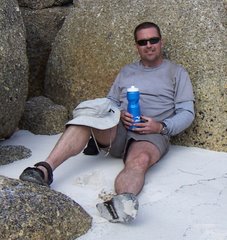
I've just celebrated my fortieth birthday with some of my family and best friends at a pub in Melbourne. It was a terrific party as the photo will attest, but what really struck me was a billboard that I read early this week that said:
How old would you act if you didn't know how old you were?
So this got me to thinking. At first blush, it seemed to be saying something similar to the expression that was sometimes hurled at me as a child to ... act my age. But there's something else going on as well, isn't there? And it's also more complicated than the cliched expression that says ... you're only as old as you feel.
I don't know if it was just that I had turned 40 and was feeling perhaps a little more introspective, but the more I thought about this billboard, the more inspirational I found it.
Of course our upbringing, our educational opportunities, our luck, the friends we make, the jobs we have, they all impact on our lives to greater or lesser degrees. This conditioning goes a big way in shaping how we think about ourselves, and how others think about us. Age is but one component. But think about it, if you didn't know how old you were, how old would you act?
But it's more, so much more ...
If you didn't know how smart you were, how smart could you be? If you didn't know that you had failed before, how brave would you be that next time? If you didn't know how happy you were, how happy could you be? If you didn't know what your job was, what job would you do?
All of these questions have been important questions for me to answer at some point in my life. As I was thinking about this advertising billboard, it also provided a springboard for what I wanted to say to my friends and family who could come along to my birthday party.
The billboard reminded me of another quote that I had read somewhere that basically said that if we celebrated the anniversary of our death instead of the anniversary of our birth, how differently would we look at our lives?
Now, I've always been a big fan of wakes - it must be that Irish heritage that lurks a couple of generations ago. And it seems to me that wakes often provide the forum for everyone to remember someone's life, often the funny moments, over a few drinks. So I thought that a wake - turned on its head - would provide me with a wonderful opportunity to tell some stories about the people most close to me.
As I celebrated my birthday, I told a range of stories about funny moments in the lives of my friends and family and how what these friends and family members meant to me. We may not always get the chance to say those sorts of things to the people close to us, and I'm old enough now to realise that.
What would you say?